
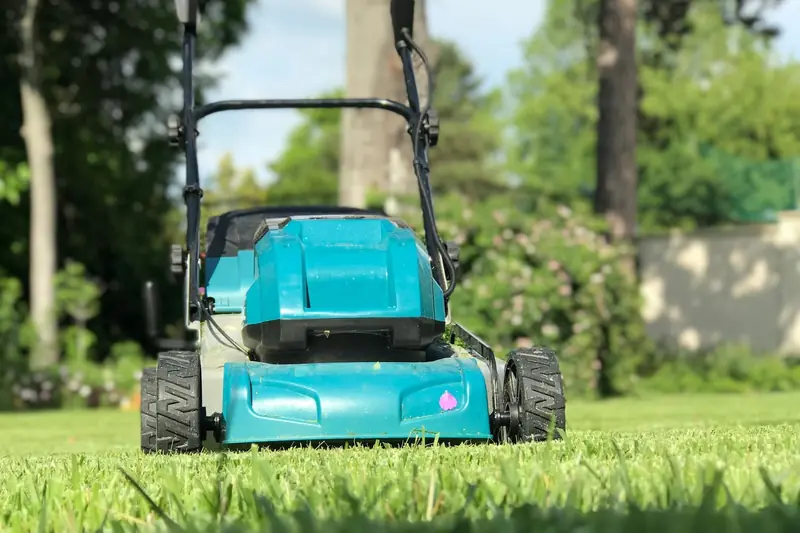
Robotic Mower vs Push Mower: Is a Robot Worth It?
A robotic mower trims a little every day on its own, and a push mower cuts on your schedule with your effort. Both can give you a good lawn. The difference is in setup, slopes, cut style and upkeep. Here is the comparison point by point, also answering how robotic lawn mowers work.
Robotic mower: the better choice if…
- You want the lawn cut regularly without spending your weekends on it.
- Your lawn has a clear boundary and you are comfortable with a setup stage.
- You prefer little-and-often cutting over a weekly mow.
Push mower: the better choice if…
- You want to buy once with no boundary setup, and mow only when you decide to.
- Your lawn has odd shapes, steep banks or lots of obstacles.
- You like being in control of what gets cut and when.
Jump to section
At a glance
| Point | Robotic mower | Push mower |
|---|---|---|
| How it navigates | Boundary wire, or RTK satellite with app boundaries (Husqvarna) | You steer it |
| Upfront cost | Check current prices on Amazon | Check current prices on Amazon |
| Yard size and slope | Rated area; slopes about 20-40%, up to about 70% on AWD (Husqvarna) | Any size; mow across slopes (CPSC) |
| Cut quality | Few millimeters at a time, mulched | One-third rule per mow |
| Time saved | Mows itself on a schedule | Your time on every mow |
| Safety features | Collision sensors; blades stop when lifted or tipped (Husqvarna) | Blade stops within 3 seconds of releasing the handle (CPSC) |
| Noise | Check maker rating | Check maker rating |
| Maintenance | Blades every 1-2 months (Husqvarna) | Keep blades sharp (Illinois Extension) |
How it navigates
A robotic mower needs a boundary. Traditional models follow a buried or pegged boundary wire. Wire-free models, such as Husqvarna's, use RTK-GNSS satellite positioning with virtual boundaries set in an app (Husqvarna). A push mower needs no setup at all: you decide where it goes. That makes a push mower simpler for odd-shaped lawns, and a robot more appealing for open lawns where one setup pays off every week.
Upfront cost
Prices change often, so we do not quote any here. The right comparison is the full cost over several years, including blades and any extras. Check current prices on Amazon from our robotic mowers and battery push mowers guides before you decide.
Yard size and slope limits
Robotic mowers carry a rated lawn area, so match it to your yard. Slope limits vary by model: Husqvarna says its standard models handle roughly 20 to 40% inclines and its all-wheel-drive models up to about 70%, around 35° (Husqvarna). With a walk-behind mower, CPSC says to mow across slopes, not up and down (CPSC).
Cut quality
Robotic mowers cut a few millimeters at a time and leave fine clippings, which Husqvarna calls micro-mulching (Husqvarna). With a push mower, the rule is not to remove more than one-third of the leaf at once; for a lawn kept at 2 inches, mow before it passes 3 inches (UMass). Illinois Extension says clippings are 75 to 80% water, break down readily and recycle nitrogen (Illinois Extension).
Time saved
A robot mows on a schedule you set in an app or on a panel, so you spend no time pushing. It still needs a setup stage, and its blades need changing on the maker's schedule. A push mower needs your time on every mow, and in spring Illinois Extension notes that may be more than once a week (Illinois Extension).
Safety features
Husqvarna lists collision sensors and blades that stop immediately when its robotic mower is lifted or tipped (Husqvarna). For push mowers, the federal CPSC standard, effective since 1982, requires walk-behind rotary mowers to stop the blade within 3 seconds of releasing the handle control (CPSC). Either way, keep children away while any mower runs. See our lawn mower safety guide.
Noise
Noise differs between models, so use each maker's own decibel rating from the listing. NIOSH considers noise above 85 dBA hazardous (NIOSH). We do not claim one type is quieter than the other; compare the ratings for the specific models you are considering.
Maintenance
Husqvarna suggests replacing robotic mower blades every 1 to 2 months (Husqvarna). On a push mower, a sharp blade cuts cleanly and reduces disease, while dull blades tear grass and leave a brownish cast (Illinois Extension).
Which should you buy?
Pick a robotic mower if your lawn is open, you want regular light cutting and you do not mind a setup stage. Pick a push mower if your yard is complex or you want simple, hands-on control. Whichever you choose, set the height with our mowing height guide.
Alternatives
If you want a motor without a robot, see battery vs gas lawn mower, or a manual reel mower for a small lawn.
FAQ
How do robotic lawn mowers work?
Most follow a boundary wire. Wire-free models use RTK-GNSS satellite positioning and a virtual boundary that you set in an app (Husqvarna).
Do robotic mowers leave clippings?
Yes, but the clippings are fine and short. The mower takes off a little each day and the clippings feed back into the lawn, which Husqvarna calls micro-mulching (Husqvarna).
Can a robotic mower handle slopes?
Some can. Check the slope figure for your model: Husqvarna puts standard models at roughly 20 to 40% and all-wheel-drive models at up to about 70% (Husqvarna).
Related
-

Buying guide
Best Robotic Lawn Mowers
Navigation, rated area, slope limits and safety sensors, side by side.
-
Buying guide
Best Battery-Powered Lawn Mowers
Deck width, battery size, drive type and cutting modes, side by side.
-
-

Guide
Lawn Mower Safety: Rules That Prevent the Worst Injuries
Age rules, protective gear, slopes and refueling, from CPSC and AAP.
-
Guide
How High Should You Mow Your Lawn? Heights by Grass Type
Extension mowing heights by grass type, plus the one-third rule.


Get the Spring Lawn Startup Checklist
A printable checklist covering mower height, safety gear, spreader calibration, sprinkler output and raised-bed soil tests. Free, and sized for the garage wall.