Lawn Mower Safety: Rules That Prevent the Worst Injuries
Age rules, protective gear, slopes and refueling, from CPSC and AAP.
Quick answer
Jump to section
How many people get hurt (and how)
Mower injuries are common and often serious. CPSC reports an average of 35,000 people a year treated in US emergency rooms for walk-behind power mower injuries between 2013 and 2015, and notes that toe amputations are not uncommon (CPSC). The AAP adds that more than 5,000 children are treated in emergency departments each year for power mower injuries (AAP).
Those figures are for power mowers. They are a reason to treat a mower as a serious machine, not a toy or a chore to rush through. The rest of this guide covers the habits that both agencies list.
Kids and mowers: the age rules
The AAP says children should be at least 12 to use a walk-behind power mower and at least 16 to use a riding mower. Children should never ride as passengers on a riding mower (AAP).
Age is only one part of the picture. Whatever the age, keep younger children indoors or well away from the lawn while anyone mows, and never let them stand in the path of the mower. That is our general advice rather than a figure from the AAP page.
| Who | AAP guidance |
|---|---|
| Child using a walk-behind power mower | At least 12 years old |
| Child using a riding mower | At least 16 years old |
| Child as a passenger on a riding mower | Never |
Before you start: clear the lawn
Walk the lawn before you mow. CPSC says to clear twigs, stones and toys first, because objects thrown by the blade have caused severe injuries and deaths (CPSC). CPSC's 2011 safety tips for rotary mowers say the same (CPSC).
Blade speed explains why. CPSC notes that blade tips can move at over 200 mph (CPSC). A small stone at that speed is dangerous to you and to anyone nearby.
A quick pre-mow checklist:
- Walk the lawn and pick up twigs, stones, toys and tools.
- Make sure children and pets are indoors or well away.
- Check that guards and shields are in place. CPSC says never to remove guards.
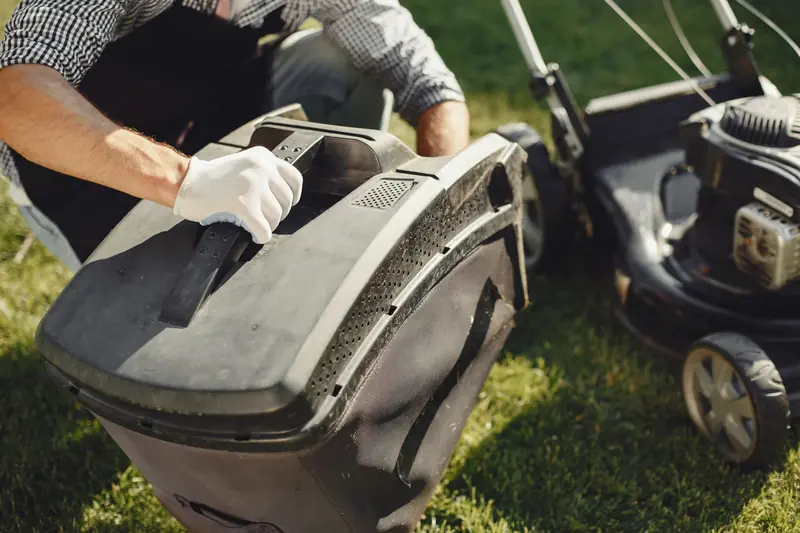
- Put on your shoes, eye protection and hearing protection.
- Fill the tank before you start the engine, if the mower is gas-powered.
Shoes, eye and hearing protection
CPSC and the AAP both say to wear sturdy closed-toe shoes, not sandals or sneakers, and slacks, with eye and hearing protection (CPSC; AAP).
Hearing protection is not only for gas mowers. NIOSH recommends 85 dBA over an 8-hour shift as the exposure limit, and considers noise above that level hazardous (NIOSH). Check the maker's decibel rating for your mower, since we do not give ratings for specific models here.
Slopes, reverse and wet grass
On a slope, CPSC says to mow across, not up and down, when you use a walk-behind mower. It also says to push the mower forward and to avoid pulling it backward, and not to mow wet grass (CPSC).
Wet grass is a problem for a second reason. Illinois Extension says it is never advisable to mow when the grass is wet, and wet clippings can clog the chute and stall the engine (Illinois Extension). If a clog happens, see the next section before you reach for it.
Refueling and clearing clogs
CPSC says never to refuel a running or hot mower. Fill the tank before you start the engine. It also says to stop the blade completely before clearing a clogged chute, and to disconnect the spark plug before maintenance (CPSC; CPSC 2011). Never remove guards.
If your mower is battery-powered, the same logic applies: stop the blade fully and follow the manual's steps for disconnecting power before you reach under the deck. A manual reel mower removes the fuel risk altogether, though you should still keep hands and feet clear of the blades.
Blade-stop and other built-in safety features
A federal CPSC standard, effective June 30, 1982, requires walk-behind rotary mowers to stop the blade within 3 seconds of releasing the handle control (CPSC). That means the blade should stop when you let go. It does not mean the blade is safe to touch the moment you let go, so wait for it to stop and disconnect power before you reach under the deck.
Never defeat a safety control to make mowing easier. Do not tie a handle control down, and do not remove a guard or a discharge shield. If a feature is broken, fix it before you mow.
When you compare models, check the listing and the manual for the blade-stop control, the guards and the instructions for your type. Our guides to battery-powered mowers and gas mowers list the specs you should compare.
Robotic mowers: what the sensors do
Robotic mowers have their own safety features. As one maker example, Husqvarna lists collision sensors and blades that stop immediately when the mower is lifted or tipped (Husqvarna). That is a maker statement, so check the manual for the mower you are considering.
Sensors do not replace supervision. A robotic mower still has a spinning blade, and it runs while you are not watching. Keep children and pets off the lawn while it runs, and set its schedule for times when the yard is empty. See our guide to the best robotic lawn mowers for how models compare on sensors and app control, and robotic mower vs push mower for whether a robot fits your yard.
If you want the simplest mower of all, a manual reel mower has no engine, battery or fuel. The same clothing and clearing rules still apply.
Gear that helps
-
Best Battery-Powered Lawn Mowers
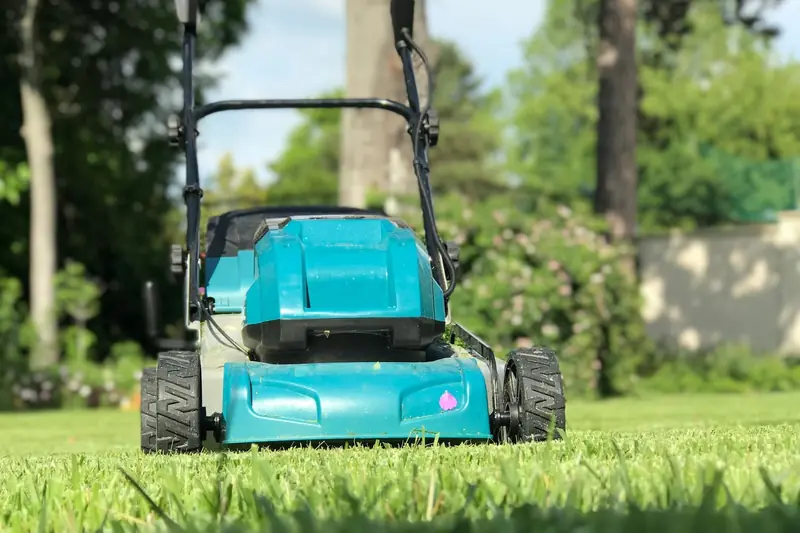
Compare battery mowers by deck width, runtime and cutting modes, and check the blade-stop standard that applies to walk-behind rotary mowers.
-

Best Robotic Lawn Mowers
Robotic mowers list collision sensors and blade-stop when lifted, which our guide compares by model.
-
Best Reel Mowers (Manual Push)
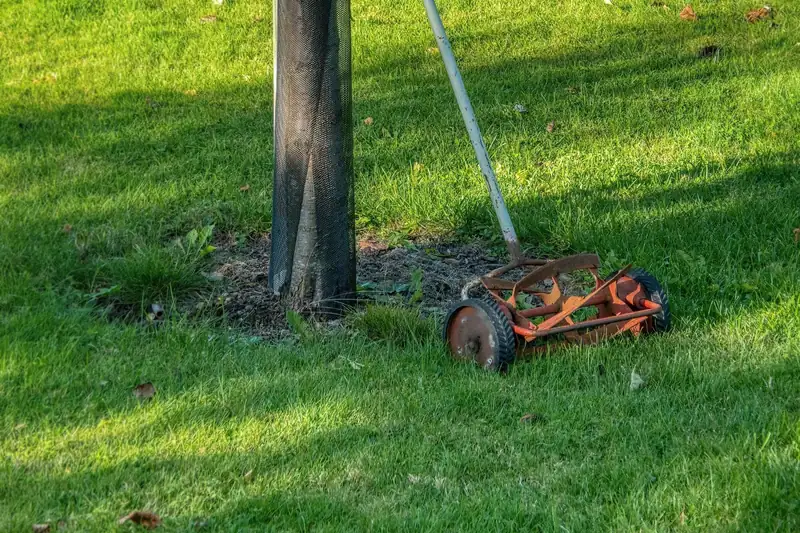
Manual reel mowers have no engine to refuel, which removes one of the risks covered here.


FAQ
How old should a child be to mow the lawn?
The AAP says children should be at least 12 to use a walk-behind power mower and 16 for a riding mower (AAP).
Should I mow wet grass?
No. CPSC says not to mow wet grass (CPSC).
Can I mow up and down a slope?
With a walk-behind mower, CPSC says to mow across slopes, not up and down (CPSC).
Related
-
Buying guide
Best Battery-Powered Lawn Mowers
Deck width, battery size, drive type and cutting modes, side by side.
-
-
Buying guide
Best Robotic Lawn Mowers
Navigation, rated area, slope limits and safety sensors, side by side.
-
Buying guide
Best Reel Mowers (Manual Push)
Cutting width, blade count and height range for manual push mowers.
-
Guide
How High Should You Mow Your Lawn? Heights by Grass Type
Extension mowing heights by grass type, plus the one-third rule.
-


Get the Spring Lawn Startup Checklist
A printable checklist covering mower height, safety gear, spreader calibration, sprinkler output and raised-bed soil tests. Free, and sized for the garage wall.