
How High Should You Mow Your Lawn? Heights by Grass Type
Extension mowing heights by grass type, plus the one-third rule.
Quick answer
Mow most home lawns at 2½ to 3 inches (Illinois Extension). Never remove more than one-third of the grass leaf in a single cutting. Some universities suggest cutting as high as 4 inches, and a few warm-season grasses are mowed lower, so check your grass type in the chart below.
Jump to section
The short answer: 2½-3 inches for most lawns
Illinois Extension says most home lawns do best when mowed at 2½ to 3 inches (Illinois Extension). If you do not know what grass you have, start there. Some universities suggest going up to 4 inches, so you will see taller numbers in other advice. The range in this guide is the Illinois figure unless a sentence says otherwise.
The next section shows the range for each grass type, and the one after it explains how to avoid cutting too much at once. If you are unsure of your grass type, a local extension office can help you identify it.
Check your mower's manual for how to change the height safely, with the engine off or the battery removed, and for what each setting on the deck gives you.
Heights by grass type (cool- and warm-season)
Grass types have different recommended heights. Illinois Extension lists them as ranges, so you can choose any height inside the range for your grass type. The list is as follows (Illinois Extension).
| Grass | Season type | Recommended height |
|---|---|---|
| Kentucky bluegrass | Cool-season | 2 to 3 inches |
| Tall fescue | Cool-season | 2½ to 3½ inches |
| Perennial ryegrass | Cool-season | 2 to 3 inches |
| Creeping red fescue | Cool-season | 1½ to 2 inches |
| Bermudagrass | Warm-season | 1 to 2 inches |
| Buffalograss | Warm-season | 1½ to 3 inches |
| Zoysiagrass | Warm-season | 1 to 3 inches |
Two things follow from the table. First, "most lawns" is a good shorthand for cool-season mixes, but warm-season lawns can be mowed lower. Second, your mower has to reach the height your grass needs. A deck that only goes up to a lower setting will not suit a tall fescue lawn, and a deck that cannot go low enough will not suit a bermudagrass lawn.
When you shop, check the height range in the listing. Our guide to battery-powered lawn mowers has a height range column for every pick, and the reel mower guide matters most here, since some reel mowers cannot reach taller cuts.
The one-third rule
Do not remove more than one-third of the grass leaf in a single cutting (Illinois Extension; UMass).
UMass gives an example: a lawn kept at 2 inches should be mowed before it passes 3 inches (UMass). The same one-third logic applies at any height in the chart. Use it for your own grass: pick a target height from the chart, and mow before the lawn grows past the point where the cut would take off more than one-third of the leaf.
Here is a simple routine to apply the rule:
- Look up your grass type in the chart and choose a target height.
- Set the mower deck to that height and mow.
- Check the lawn every few days during fast growth.
- Mow again before the cut would remove more than one-third of the leaf.
- If you missed a week and the lawn is long, raise the deck for the first cut so that you stay within the one-third rule, then lower it for the next.
Bag or mulch? Why clippings help
Illinois Extension says clippings are 75 to 80% water, decompose readily, do not cause thatch and recycle nutrients, especially nitrogen, so the lawn needs less fertilizer (Illinois Extension).
Mulching works best when you follow the one-third rule. Illinois Extension notes that mulching mowers recycle nutrients faster but work best when the grass is not too tall or wet (Illinois Extension). If you let the lawn get long, raise the deck for the first cut, since mulching works best when the grass is not too tall.
A robotic mower solves this by design. Husqvarna says its robotic mowers cut a few millimeters at a time, which it calls micro-mulching (Husqvarna). The maker's statement matches the idea behind the one-third rule: little and often.
Sharp blades and wet grass
A sharp blade cuts cleanly and reduces disease. Dull blades tear the grass and leave a brownish cast (Illinois Extension; UMass). If your lawn looks frayed or tan at the tips after mowing, a dull blade is the first thing to check. Follow your mower's manual for sharpening or replacing the blade, and disconnect the spark plug or battery first.
Mowing wet grass is a separate problem. Illinois Extension says, "It is never advisable to mow when the grass is wet," and wet clippings can clog the chute and stall the engine (Illinois Extension). CPSC also lists not mowing wet grass among its walk-behind mower rules (CPSC).
For the full list of mower safety rules, see our lawn mower safety guide.
How often to mow
Mow as often as the lawn needs it, not on a fixed day. Illinois Extension notes that in spring, when growth is fastest, that may be more than once a week (Illinois Extension).
The one-third rule is the real schedule. If the grass has grown past the point where the cut would remove more than a third, you waited too long. Next time, mow a day or two sooner. Our watering guide explains how much water a cool-season lawn needs to keep growing.
Mowers that make it easy
The best mower is the one that reaches your target height and that you will actually use on schedule. Each type helps in a different way.
- Battery mowers are covered in our guide to the best battery-powered lawn mowers. Compare height range, deck width and cutting modes in our guide to the best battery-powered lawn mowers.
- Gas mowers suit larger lawns or thick growth. See the best gas lawn mowers for engine size, drive type and cutting modes.
- Reel mowers suit small lawns, as long as the height range reaches your target. See the best reel mowers.
- Robotic mowers keep the cut small and frequent. See the best robotic lawn mowers, and robotic mower vs push mower if you are deciding between the two.
Whichever you pick, set the height first, keep the blade sharp and mow when the grass is dry.
Gear that helps
-
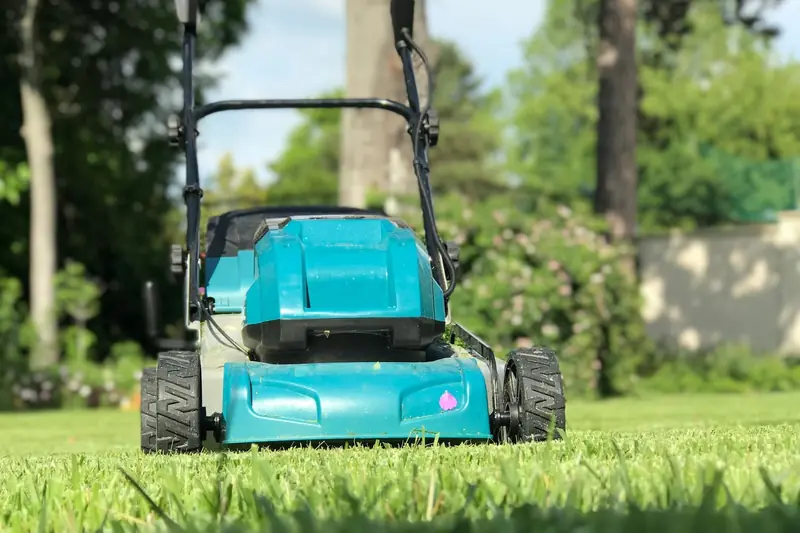
Best Battery-Powered Lawn Mowers
Check the height range column so the deck reaches the height your grass needs, and look at mulch, bag and side-discharge modes.
-
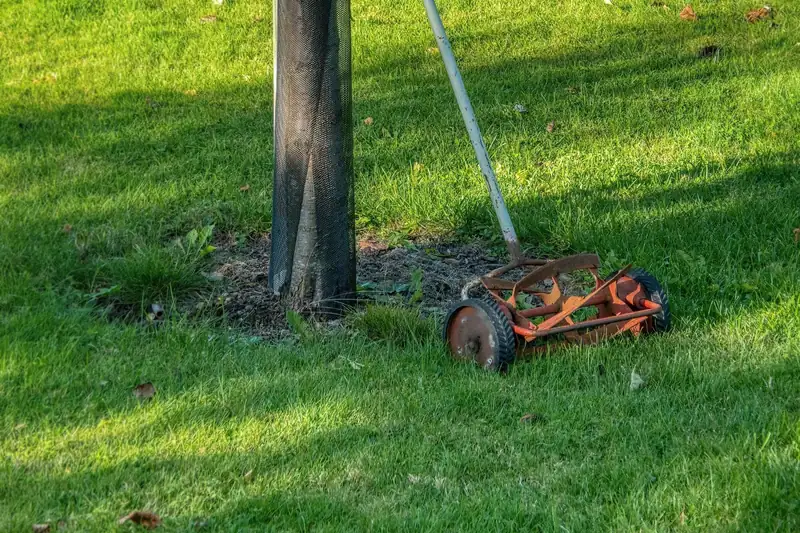
Best Reel Mowers (Manual Push)
A sharp blade cuts cleanly, but a reel mower's height range must reach your target, so check it first.
-
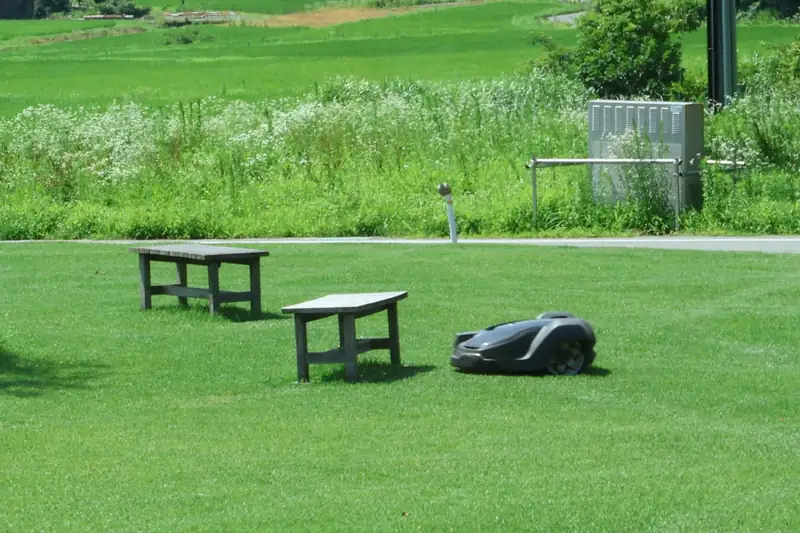
Best Robotic Lawn Mowers
A robot cuts a few millimeters at a time, which fits the little-and-often idea behind the one-third rule.


FAQ
Should I bag or mulch my clippings?
Mulch when you follow the one-third rule. Clippings are 75 to 80% water, decompose readily, do not cause thatch and recycle nutrients, especially nitrogen (Illinois Extension).
Can I mow wet grass?
Illinois Extension says it is never advisable to mow when the grass is wet, and wet clippings can clog the chute and stall the engine (Illinois Extension).
How often should I mow?
Mow as often as the lawn needs it. In spring that may be more than once a week (Illinois Extension).
Related
-
Buying guide
Best Battery-Powered Lawn Mowers
Deck width, battery size, drive type and cutting modes, side by side.
-
-
Buying guide
Best Reel Mowers (Manual Push)
Cutting width, blade count and height range for manual push mowers.
-
Buying guide
Best Robotic Lawn Mowers
Navigation, rated area, slope limits and safety sensors, side by side.
-
Guide
Lawn Mower Safety: Rules That Prevent the Worst Injuries
Age rules, protective gear, slopes and refueling, from CPSC and AAP.
-

Guide
How to Water Your Lawn: How Much, How Often, and When
How much, how often and when, plus the can test to measure your sprinkler.


Get the Spring Lawn Startup Checklist
A printable checklist covering mower height, safety gear, spreader calibration, sprinkler output and raised-bed soil tests. Free, and sized for the garage wall.