Raised Bed Gardens: Size, Soil and Safe Materials
Depth by crop, soil mixes, the treated-wood question and soil tests.
Quick answer
Raised beds are usually 2 to 4 feet wide and 2 to 12 inches tall. On hard surfaces, make them at least 8 inches deep for greens, beans and cucumbers, and 12 to 24 inches deep for peppers, tomatoes and squash (UMD Extension). Test your soil before you plant, and test for lead if you grow food.
Jump to section
Width, height and path spacing
University of Maryland Extension says raised beds are usually 2 to 4 feet wide and 2 to 12 inches tall (UMD Extension). The width has a practical reason: you should be able to reach the middle from the edge without stepping into the bed.
If the bed has access on both sides, the full width range works. If one side is against a fence or wall, you can only reach from one side, so choose a narrower bed. Length is up to you and your space.
Plan the paths too. UMD puts the pathways around beds at about 2 feet wide (UMD Extension). Leave room for a wheelbarrow or a kneeler if you use one.
If you are buying a ready-made bed rather than building one, check the dimensions in the listing. Our raised bed buying guide has a dimensions column and a fill volume column for every pick.
How deep for which crops
Depth depends on the crop and on the surface. UMD says beds on hard surfaces need at least 8 inches for leafy greens, beans and cucumbers, and 12 to 24 inches for peppers, tomatoes and squash (UMD Extension).
| Crop group | Minimum depth on a hard surface |
|---|---|
| Leafy greens, beans, cucumbers | At least 8 inches |
| Peppers, tomatoes, squash | 12 to 24 inches |
Those minimums are for beds on a patio, deck or other hard surface, where roots cannot reach the ground below. A bed on lawn or soil has a different situation, because roots can grow into the ground beneath if the bed has an open bottom. UMD's soil advice for beds on lawn is covered in the next section.
If you want to grow a mix, build to the deepest need or divide the bed. Read the crop groups in the table once, then note which ones you want on your list before you choose a bed height. Put the deep-rooted crops where they have the depth, and the shallow ones in the rest. A taller bed needs more fill, so compare the fill volume when you shop.
Soil and compost mixes
The mix depends on where the bed sits. For beds on lawn or poor soil, UMD suggests a mix of compost to topsoil at 1:2 or 1:1, at least 8 inches deep, or a 1:1 mix of compost and soilless media. On hard surfaces, UMD suggests 1:1 compost and soilless mix. In beds at least 16 inches deep on a hard surface, topsoil can make up as much as 20% of the mix by volume (UMD Extension).
| Bed location | UMD mix suggestion |
|---|---|
| On lawn or poor soil | Compost to topsoil 1:2 or 1:1, at least 8 inches deep; or 1:1 compost and soilless media |
| On a hard surface | 1:1 compost and soilless mix |
| On a hard surface, at least 16 inches deep | Topsoil up to 20% by volume |
Wood choices (and the CCA question)
Many ready-made beds are wood. UMD lists decay-resistant woods as cedar, black locust, oak and redwood (UMD Extension). You can compare cedar models in our raised bed guide.
Pressure-treated wood needs a closer look, because of what the older treatment contained.
Micronized copper azole (MCA) pressure-treated wood is now the most common residential option and is considered low in toxicity. In an Oregon State study, it raised soil copper only within about 1 inch of the bed edge. If you are concerned, UMD says you can paint or stain the wood, or use stone or brick instead (UMD Extension).
When in doubt about a product, check the maker's statement about its suitability for food gardens.
Metal, composite and block beds
If you want to avoid wood questions, UMD lists non-wood options: galvanized steel, composite plastic, pavers or stone, and concrete blocks (UMD Extension). Each has trade-offs.
- Galvanized steel. Check the coating and the warranty. Our raised bed guide has a coating column.
- Composite plastic. Check how the maker describes the material and its use for food gardens.
- Pavers or stone. Check the height you can build against your crops.
- Concrete blocks. Check the height against your crops.
Whatever you pick, match the height to your crops, and read the maker's statement on whether the material is suited to a food garden. A low bed is easy to build but may be too shallow for deep-rooted crops on a hard surface.
Test your soil first (pH and lead)
UMD says to test soil before changing it. The ideal pH for most vegetables is 6.2 to 6.8, and 6.8 to 7.2 is fine in beds rich in organic matter (UMD Extension).
If you plan to fill a bed from outside soil, test the fill as well. A local extension office can tell you how to collect a sample and where to send it. Do the test before you build, because the result may change where you site the bed or what you fill it with. UMD's own reference points are above: typical background lead of 10 to 50 ppm, and 400 ppm as the level over which not to grow vegetables (UMD Extension).
Siting your bed
The surface under your bed decides the rules for depth and soil, so decide that first. On lawn or open ground, the bed can have an open bottom. On a patio or deck, UMD's hard-surface depth minimums apply, so choose a bed designed for that surface (UMD Extension).
Other points to plan around: access for the path width above, a water source close enough for a hose, and level ground so the soil does not slump to one side. A hose timer on the faucet can water the bed on a schedule. See our guide to the best smart sprinkler controllers and hose timers, and our watering guide for the lawn.
Finally, pick the bed that matches your crops and your surface. UMD's figures give you the numbers to check: width of 2 to 4 feet so you can reach the middle, depth by crop, and a mix that suits where the bed sits (UMD Extension). Compare dimensions, material, bottom type and coating in our guide to the best raised garden beds.
Gear that helps
-
Best Raised Garden Beds
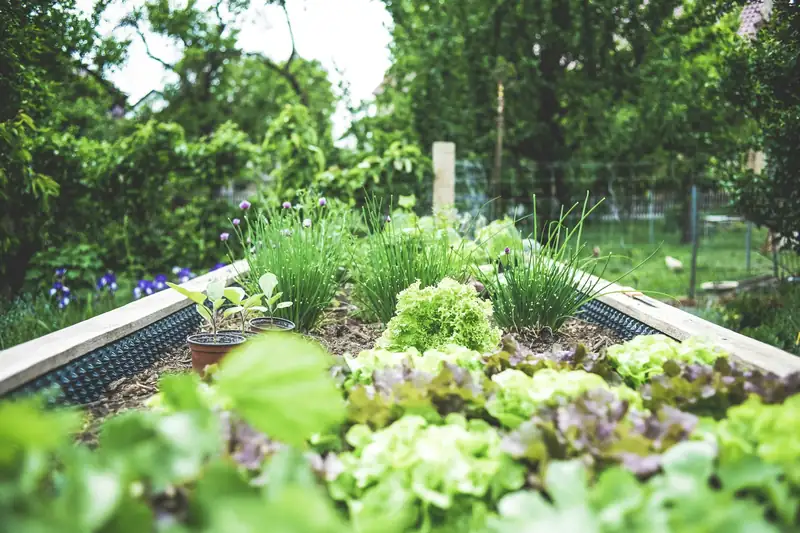
Compare beds by material, height, fill volume and open or closed bottom against the depth your crops need.
-
Best Smart Sprinkler Controllers and Hose Timers
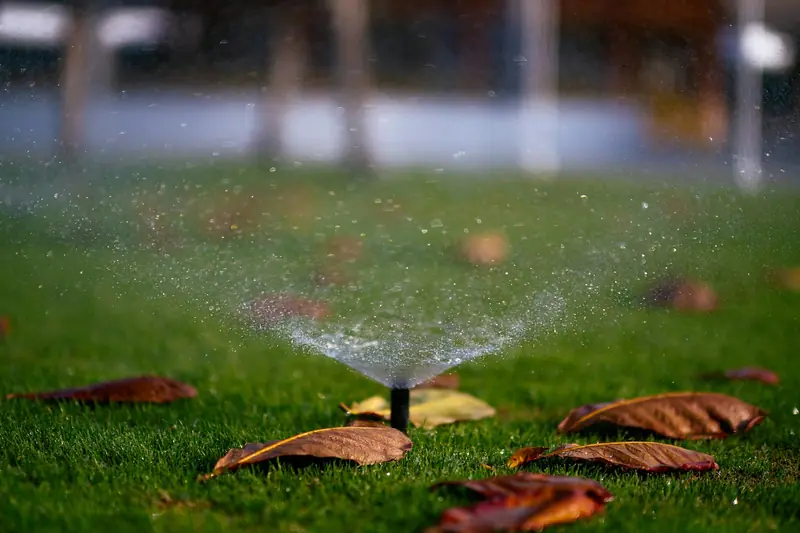
A hose timer can water a bed on a schedule so the soil does not dry out between visits.

FAQ
How deep should a raised garden bed be?
On hard surfaces, at least 8 inches for greens, beans and cucumbers, and 12 to 24 inches for peppers, tomatoes and squash (UMD Extension).
Is pressure-treated wood safe for raised beds?
CCA-treated wood was discontinued for residential outdoor use in 2004. Micronized copper azole (MCA) wood is the most common option today and is considered low in toxicity (UMD Extension).
What soil do I fill a raised bed with?
On lawn or poor soil, compost to topsoil at 1:2 or 1:1, at least 8 inches deep. On hard surfaces, 1:1 compost and soilless mix (UMD Extension).
Related
-
Buying guide
Best Raised Garden Beds
Material, dimensions, fill volume and bottom type, side by side.
-
Buying guide
Best Smart Sprinkler Controllers and Hose Timers
Zones, WaterSense label, weather scheduling and connectivity, side by side.
-
-

Guide
How to Water Your Lawn: How Much, How Often, and When
How much, how often and when, plus the can test to measure your sprinkler.
-
Gift guide
Gifts for Gardeners and Lawn Lovers
Sprinklers, spreaders, battery tools and raised beds, grouped by gardener.


Get the Spring Lawn Startup Checklist
A printable checklist covering mower height, safety gear, spreader calibration, sprinkler output and raised-bed soil tests. Free, and sized for the garage wall.