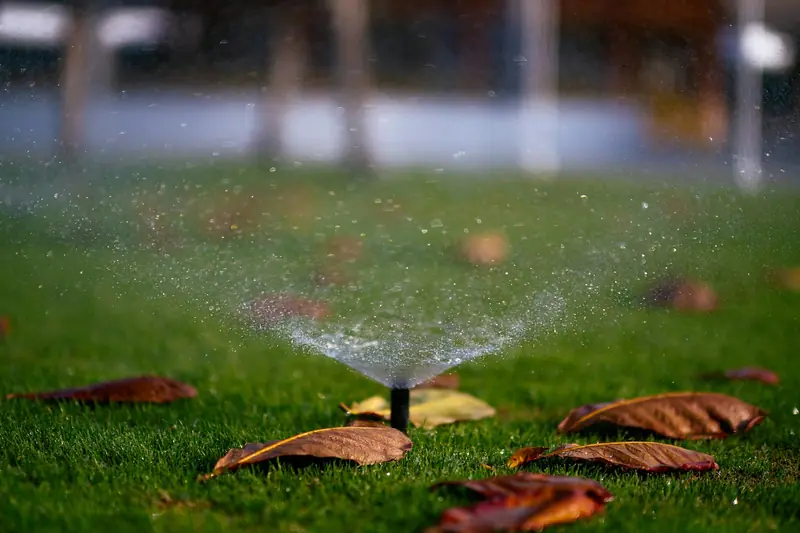
Best Smart Sprinkler Controllers and Hose Timers
A smart controller or hose timer waters on a schedule and can adjust to the weather, so you do not have to remember. The decisions that matter are whether you have an in-ground system or just a hose faucet, how many zones you need, and whether the product carries the WaterSense label. This guide is for homeowners who want a steadier schedule and less wasted water.
Jump to section
What we look for
WaterSense label
the label shows the controller has met EPA's water-efficiency criteria.
Weather-based scheduling
a controller that adjusts to weather skips watering when the lawn does not need it.
Zones
each zone is one set of sprinklers; the controller must cover all of yours.
Hose faucet or in-ground system
the two types attach to different things and are not interchangeable.
App and connectivity
app control lets you change a schedule without going outside.
Manual override and rain delay
you need a quick way to pause or run watering by hand.
- Sources: manufacturer product pages and manuals, warranty terms, EPA WaterSense for water-saving data, and Illinois Extension for how much lawns need.
How to choose the right smart controller
A smart controller helps only if the schedule is right. Start with how to water your lawn for the how much and when, then check your hardware against our best lawn sprinklers guide.
WaterSense label
EPA says swapping a clock-based controller for a WaterSense-labeled one can cut an average home's irrigation water use by up to 30%, or up to 15,000 gallons a year (EPA WaterSense). Check the WaterSense labeled column for each pick. Savings depend on your system and climate, so treat the EPA figure as an upper estimate.
Weather-based scheduling
Weather-aware controllers use local conditions to change or skip a cycle. Check the Weather adjust column and what data source the maker uses. Even with a smart schedule, measure your output with cans and set the total near what your lawn needs: Illinois Extension says about 1 to 1.5 inches a week for cool-season grass (Illinois Extension).
Zones
An in-ground system is divided into zones that each run in turn. Count yours before you buy. A hose timer controls the sprinkler or sprinklers attached to the faucet, so check the Zones column carefully for how many it can run.
Hose faucet or in-ground system
A hose timer screws onto an outdoor faucet and controls whatever hose and sprinkler you attach. An in-ground controller wires to the valves of a buried system. Check the Type column. If you are replacing a clock-based controller, make sure the new one supports your valves and wiring.
App and connectivity
Look at how the controller connects, such as Wi-Fi or Bluetooth, and whether it needs an account. Check whether you can still run it from the device if the app is unavailable. An outdoor controller can sit far from the router, so read the Connectivity column and the manual.
Manual override and rain delay
A manual run option helps when you are seeding or testing coverage, and a rain delay lets you pause the schedule for a set time. Check the product description or manual for both. Also read the Power and Outdoor rating columns so the controller suits the place where you will mount it.
Tips for using your smart controller
- Outdoor water use is more than 30% of household use on average, and can reach 60% in arid regions (EPA WaterSense).
- A poorly maintained automatic system can waste up to 25,000 gallons a year (EPA WaterSense). Check the system for leaks and misaimed heads.
- Water deeply and infrequently in the early morning (Illinois Extension).
- Measure your sprinkler's output with cans before you trust any schedule; see our watering guide.
FAQ
Do smart controllers save water?
EPA says replacing a clock-based controller with a WaterSense-labeled one can cut an average home's irrigation use by up to 30%, which it puts at up to 15,000 gallons a year (EPA WaterSense).
How much water goes outdoors?
EPA's figures: more than 30% of household water use on average goes outdoors, and in arid regions the share can reach 60% (EPA WaterSense).
What does a poorly maintained system waste?
EPA says a poorly maintained automatic system can waste as much as 25,000 gallons a year (EPA WaterSense).
What schedule should I set?
Water deeply and not often, early in the morning, aiming for about 1 to 1.5 inches a week on cool-season grass (Illinois Extension).
What is the difference between a hose timer and an in-ground controller?
A hose timer attaches to an outdoor faucet and runs whatever hose and sprinkler you attach. An in-ground controller is wired to the valves of a buried sprinkler system. Check the Type column to see which each pick is.
Do I still need to measure my sprinkler's output?
Yes. Set cans on the lawn, run the sprinkler and measure the water, as Illinois Extension advises (Illinois Extension). A controller handles the timing, but the can test shows what the sprinkler delivers.
Related
-
-
Guide
How to Water Your Lawn: How Much, How Often, and When
How much, how often and when, plus the can test to measure your sprinkler.
-
Buying guide
Best Raised Garden Beds
Material, dimensions, fill volume and bottom type, side by side.
-
Buying guide
Best Fertilizer Spreaders (Broadcast and Drop)
Type, hopper size, spread width and edge guard, side by side.


Get the Spring Lawn Startup Checklist
A printable checklist covering mower height, safety gear, spreader calibration, sprinkler output and raised-bed soil tests. Free, and sized for the garage wall.