
Best Lawn Sprinklers
A good sprinkler puts water where the lawn needs it and not on the driveway. The decisions that matter are the sprinkler type, how well you can control the coverage area, and how stable it stays on a hose. This guide is for homeowners who water by hose and want even coverage without waste.
Jump to section
What we look for
Sprinkler type
oscillating, impact, rotary and stationary sprinklers each suit different lawn shapes.
Coverage and pattern control
being able to adjust the pattern keeps water off paving and out of beds.
Flow control
adjustable flow helps you match output to your water pressure and your lawn's needs.
Base stability
a stable base keeps the sprinkler from drifting or tipping.
Build material
the body material affects how well a sprinkler holds up outdoors.
Low-angle spray
low spray puts more water on the lawn, since wind is one way water is lost.
- Sources: manufacturer product pages and manuals, warranty terms, Illinois Extension for how much lawns need, and EPA WaterSense for water waste.
How to choose the right sprinkler
A sprinkler is only as good as your schedule. Read how to water your lawn for how much and when, and consider a smart sprinkler controller or hose timer to automate it.
Sprinkler type
Oscillating sprinklers sweep back and forth, impact and rotary sprinklers throw water in a circle or part circle, and stationary sprinklers cover a small patch. Check the Type column against the shape of your lawn, and read the manual for the water pressure the maker recommends. Our watering guide shows how to measure what yours puts down.
Coverage and pattern control
Coverage is a maker-stated maximum, not what you will get at your faucet. Pattern control lets you reduce the width or length so water lands on grass and not on the driveway. EPA says inefficient irrigation can lose up to 50% of outdoor water to wind, evaporation and runoff (EPA WaterSense), so accurate placement matters.
Flow control
Flow control lets you turn the output down so you do not push water faster than the soil can absorb it. Check the Flow control column. You will still need to measure what the sprinkler delivers, using the can test in our watering guide.
Base stability
Check the Base type column. A sled base glides across the grass, a spike base pushes into soil and a weighted base sits on firm ground. Choose one that suits your lawn and holds the sprinkler steady when the hose pulls.
Build material
Check the Material column and read the warranty. Compare the material of the body and of the hose connector. Follow the manual for storing the sprinkler when cold weather arrives.
Low-angle spray
EPA says inefficient irrigation can lose up to 50% of outdoor water to wind, evaporation and runoff (EPA WaterSense). A sprinkler that lets you lower or adjust the spray angle gives you a way to reduce the wind part of that loss. Illinois Extension also advises watering in the early morning (Illinois Extension), so the two habits work together.
Tips for using your sprinkler
- Water early in the morning. Midday watering loses much to evaporation, and night watering can promote turf diseases (Illinois Extension).
- Set straight-sided cans on the lawn to measure how much water your sprinkler puts down (Illinois Extension).
- Cool-season lawns need about 1 to 1.5 inches of water a week (Illinois Extension).
- Aim the sprinkler at the lawn and away from hard surfaces, so the water goes where the grass can use it.
FAQ
How much water does a lawn need?
For cool-season grass, Illinois Extension puts the need at about 1 to 1.5 inches a week to keep it green and growing (Illinois Extension).
When should I water?
Early morning is the time Illinois Extension recommends. Water applied at midday loses much of its volume to evaporation, and watering at night can encourage turf disease (Illinois Extension).
How do I know how much my sprinkler puts down?
Put straight-sided cans out on the lawn, run the sprinkler for a set time, and measure the depth of water in the cans (Illinois Extension).
How much outdoor water is wasted?
EPA says that up to half of outdoor water can be lost to wind, evaporation and runoff when irrigation is inefficient (EPA WaterSense).
Should I water the same way for newly seeded lawn?
No. Illinois Extension says to water infrequently but thoroughly, to root depth, and notes that newly seeded lawns are an exception (Illinois Extension). Follow the seed label for a new lawn.
Can a sprinkler automate itself?
Not on its own. A hose timer or smart controller does that; see our guide to smart sprinkler controllers and hose timers.
Related
-
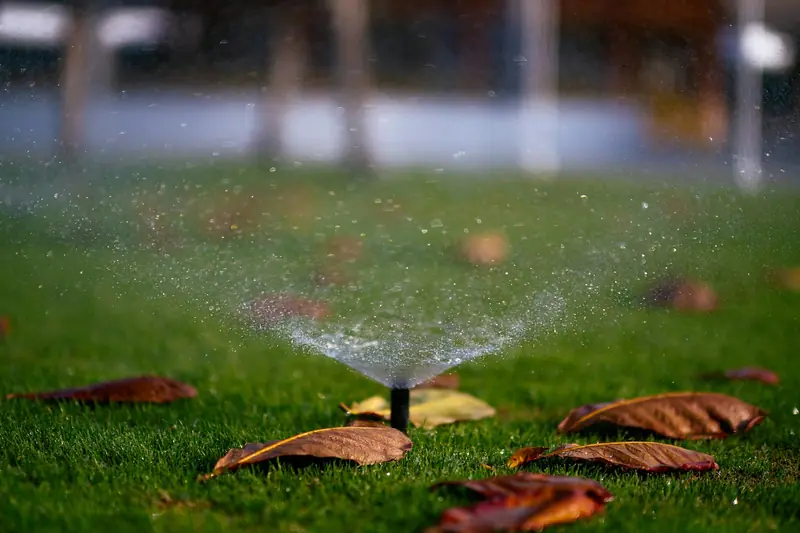
Buying guide
Best Smart Sprinkler Controllers and Hose Timers
Zones, WaterSense label, weather scheduling and connectivity, side by side.
-

Guide
How to Water Your Lawn: How Much, How Often, and When
How much, how often and when, plus the can test to measure your sprinkler.
-
Buying guide
Best Fertilizer Spreaders (Broadcast and Drop)
Type, hopper size, spread width and edge guard, side by side.
-
Buying guide
Best Raised Garden Beds
Material, dimensions, fill volume and bottom type, side by side.


Get the Spring Lawn Startup Checklist
A printable checklist covering mower height, safety gear, spreader calibration, sprinkler output and raised-bed soil tests. Free, and sized for the garage wall.