
Best Fertilizer Spreaders (Broadcast and Drop)
A spreader puts fertilizer, seed or lawn products down evenly. The decisions that matter are the type, the hopper size for your lawn, and how precise the rate settings are. This guide is for homeowners who feed their own lawn and want it to look even.
Jump to section
What we look for
Spreader type
rotary, drop and handheld spreaders suit different lawn sizes and shapes.
Hopper capacity
a bigger hopper means fewer refills on a large lawn.
Spread width
a wider spread covers more ground per pass, but needs accurate calibration.
Edge guard
an edge guard keeps granules off driveways, beds and water.
Settings scale
clear, repeatable settings make calibration easier.
Wheels and build
wheels and frame decide how well the spreader rolls and how long it lasts.
- Sources: manufacturer product pages and manuals, warranty terms, and Penn State Extension's calibration guide for spreader types and calibration.
How to choose the right spreader
Read how to calibrate a fertilizer spreader before your first pass, and see broadcast vs drop spreader if you are still choosing a type.
Spreader type
Penn State Extension describes drop spreaders as laying a band about 1.5 to 3 feet wide, which suits small, confined areas but is slow on a big lawn. Rotary, or broadcast, spreaders throw granules wider and suit small to medium lawns (Penn State). Handheld spreaders suit small patches and seed. See broadcast vs drop spreader for the full comparison.
Hopper capacity
Hopper capacity is listed in pounds. A large hopper saves trips back to the bag, and a small one is easier to store. Compare the Hopper capacity column with the size of your lawn and the product you plan to spread. Coverage figures are maker-stated and depend on the product and the rate, so check the label for yours.
Spread width
Spread width is the swath one pass covers. Penn State measures a rotary spreader's effective swath with pans placed across the path, and the edge is where the outer pans catch half of what the center pan does (Penn State). Our calibration guide explains how to do this at home.
Edge guard
Edge guards block the throw on one side so granules stay on the lawn. If your lawn borders a sidewalk, driveway or garden bed, look for one in the Edge guard column. It matters less for open lawns with no hard edges.
Settings scale
The numbers on a spreader are a starting point, not a promise. Penn State's method is to calibrate by running a measured amount over a measured strip and adjusting until you hit the label rate (Penn State). A spreader with a clear scale and a firm lock makes repeating that setting simple.
Wheels and build
Look at the wheel type, the frame and how the hopper attaches. Read the Wheel type column, then check the warranty and the maker's cleaning instructions. The manual tells you how to clean and store the spreader after use.
Tips for using your spreader
- With a rotary spreader, make two passes at right angles, each at half the rate, to avoid stripes (Penn State).
- Calibrate over a 50- or 100-foot strip before you spread on the lawn (Penn State).
- Write down the label rate and the spreader setting you land on after calibration, so you can repeat it later.
- Check your lawn's watering after feeding; our watering guide explains how much and when.
FAQ
Should I use a drop or broadcast spreader?
Penn State says a drop spreader lays down a band of about 1.5 to 3 feet, which suits small, confined areas but takes a long time on a big lawn. Rotary (broadcast) spreaders throw granules farther and suit small to medium lawns (Penn State).
How do I avoid stripes?
With a rotary spreader, Penn State advises making two passes at right angles to each other, each pass at half the rate (Penn State).
How do I calibrate a spreader?
Penn State's method: run a weighed amount of product over a measured 50- or 100-foot strip, weigh what remains, and keep adjusting the setting until the amount used matches the label rate (Penn State).
How many pounds per acre is 1 pound per 1,000 square feet?
It is 43.6 pounds per acre, according to Penn State's conversion (Penn State).
What do I need for calibration?
Penn State lists a tape measure, a scale that reads ounces or grams, a bucket, chalk or flags, and a calculator (Penn State). Our calibration guide walks through the steps.
How do I measure a rotary spreader's width?
Penn State says to place 1-square-foot pans a foot apart across the path; the edge of the effective swath is where the side pans catch half as much as the center pan (Penn State).
Related
-
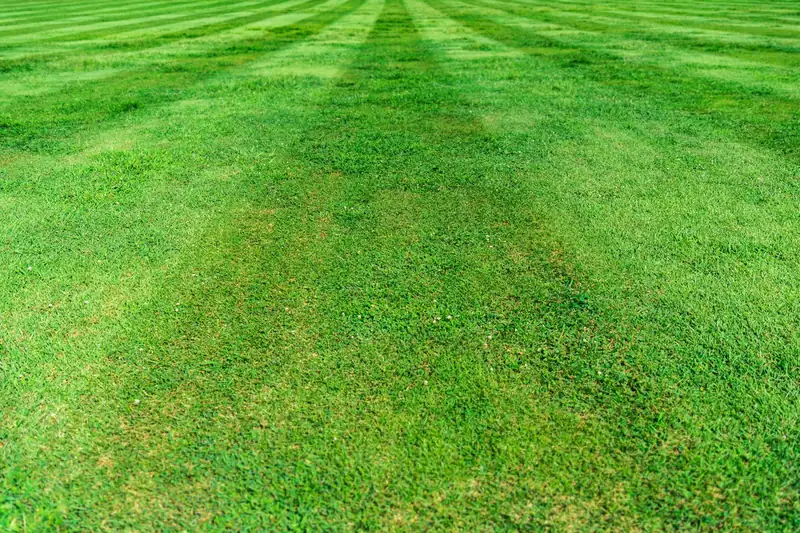
Comparison
Broadcast vs Drop Spreader
Swath width, edge accuracy, speed and calibration, side by side.
-
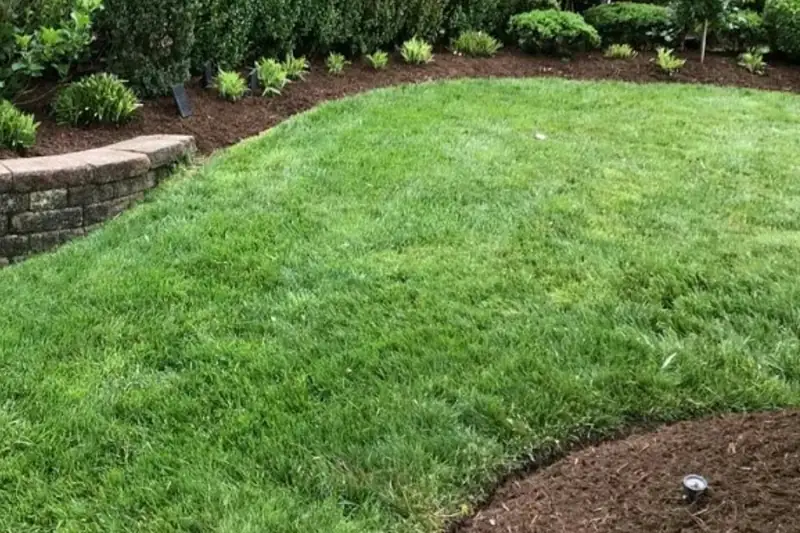
Guide
How to Calibrate a Fertilizer Spreader (Step by Step)
Test strip method, a worked example and the half-rate two-pass trick.
-
-
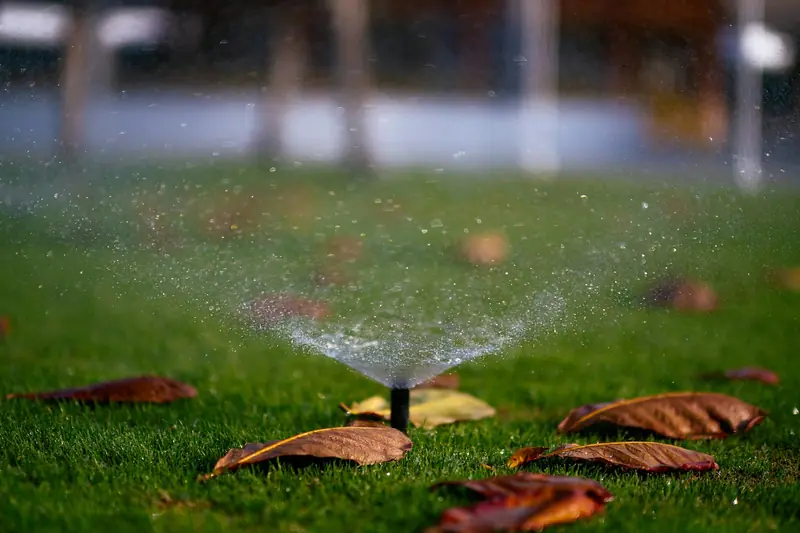
Buying guide
Best Smart Sprinkler Controllers and Hose Timers
Zones, WaterSense label, weather scheduling and connectivity, side by side.
-

Guide
How to Water Your Lawn: How Much, How Often, and When
How much, how often and when, plus the can test to measure your sprinkler.


Get the Spring Lawn Startup Checklist
A printable checklist covering mower height, safety gear, spreader calibration, sprinkler output and raised-bed soil tests. Free, and sized for the garage wall.